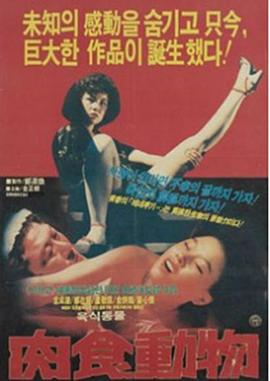
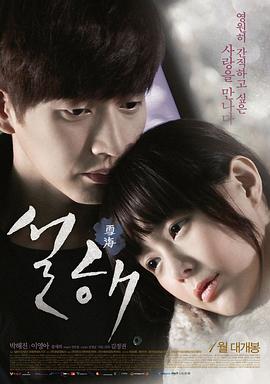
Kim Dong - sik, a securities company employee, feels an inferiority when his wife 's business succeeds, and her position in the home becomes blurred and gradually wanders. With this escape from wandering, the hostess will have extramarital affairs. Then, when his character is indecisive, he will have another home with this guidance, and will fall into deeper conflicts and abyss. The wife and the wife of the family share a certain kind of negotiation through the realism of the woman. In the end, he tried to escape from reality and wanted to flee his own pit himself and be forever forgotten by all.
Following a very public fall from grace, country music star Faith Winters seeks refuge in her rural Texas hometown, where she rediscovers feelings for her high school sweetheart, the local pastor. But the homecoming is bittersweet.
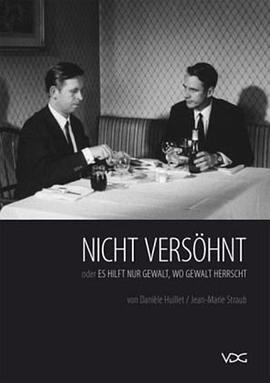
The subtitle of Jean-Marie Straub and Danièle Huillet’s first feature, from 1965, “Only Violence Helps Where Violence Reigns,” suggests the fierce political program evoked by their rigorous aesthetic. The pretext of the film, set in Cologne, is Heinrich Böll’s novel “Billiards at Half Past Nine,” which they strip down to a handful of stark events and film with a confrontational angularity akin to Bartók’s music that adorns the soundtrack. The subtlest of cues accompany the story’s complex flashbacks. The middle-aged Robert Fähmel tells a young hotel bellhop of persecutions under the Third Reich; his elderly father, Heinrich, an architect famed for a local abbey, recalls the militarism of the First World War, when his wife, Johanna, incurred trouble for insulting the Kaiser. A third-generation Fähmel is considering architecture, just as the exiled brother of Robert’s late wife, returns, only to be met by their former torturer, now a West German official taking part in a celebratory parade of war veterans. Straub and Huillet make the layers of history live in the present tense, which they judge severely. The tamped-down acting and the spare, tense visual rhetoric suggest a state of moral crisis as well as the response—as much in style as in substance—that it demands.
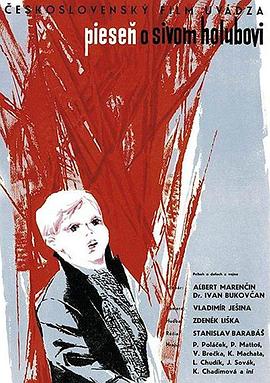
由Stanislav Barabas(1924-1994)导演的《灰鸽子之歌》(Piesen o sivom holubovi,1960年)于1961年5月首次公映,开了用意识形态上无可辩驳的主题(例如,斯洛伐克起义)来述说故事的先河。以往故事往往讲的生动,但拍摄手法的创造性仍待提高。《灰鸽子之歌》摒弃了Palo Bielik(第一代电影人中最有创造性的导演)所钟爱的叙事题材。Barabas通常用年轻人来当英雄,然后把更多的注意力放在孩子们的恐惧、游戏和欢乐上,而不是对观众进行再教育。因为即使在战争岁月,孩子们的恐惧、游戏和欢乐也未曾消失过。评论家们关注《灰鸽子之歌》(和同年拍摄完成的由Vsude zijílidé和dir. Jirí Hanibal以及Stepán Skalsky创造的捷克电影《People Live Here Too》共获1961...
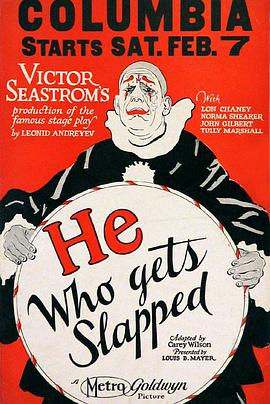
Story of an inventor who, suffering betrayal in life, makes a career of it by becoming a clown whose act consists of getting slapped by all the other clowns. He falls in love with another circus performer, and those who betrayed him enter his life yet again.
Every summer, teenage girls from across Missouri spend a week building a government from the ground up. Coming from different ends of the political and socioeconomic spectrum, they all share a passion for reimagining the future of America. The filmmakers behind Boys State (T/F 2020) return to the world of teen politics to capture the 2022 program – the first time in history that Girls State and Boys State take place simultaneously on the same campus. With rumors of Roe v. Wade being overturned in the real world, the stakes feel higher than ever for these ambitious and dedicated young women. As the days unfold and rumblings from the Boys program make their way across campus, discontent begins to emerge over the disparities between the two. An exhilarating portrait of our political landscape and the pivotal issue of gender equality.
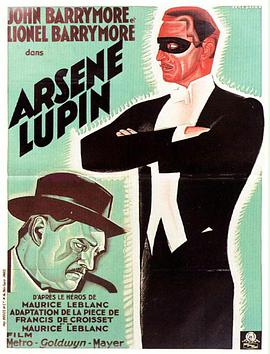
A charming and very daring thief known as Arsene Lupin is terrorizing the wealthy of Paris, he even goes so far as to threaten the Mona Lisa. But the police, led by the great Guerchard, think they know Arsene Lupin's identity, and they have a secret weapon to catch him.