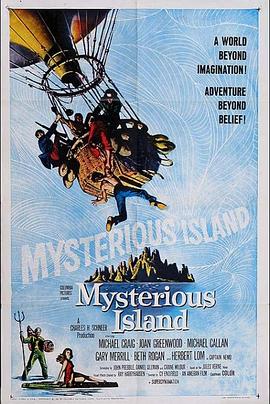
During the US Civil War, Union POWs escape in a balloon and end up stranded on a South Pacific island, inhabited by giant plants and animals. They must use their ingenuity to survive the dangers, and to devise a way to return home. Sequel to '20,000 Leagues Under the Sea' . Written by Stewart M. Clamen In 1865, during the siege of Richmond, Virginia, the union soldiers POW Captain Harding, Neb and Herbert escape in a balloon during a storm with two confederate prisoners, Sergeant Pencroft and the journalist Spilett. The uncontrollable wind takes the balloon to a mysterious island in the South Pacific in the area of New Zealand. Captain Harding self-proclaims the leader of the group and they look for food; sooner they discover that they are stranded in an island. Further, they are attacked by a giant crab that becomes their first meal. Along the days, they build a shelter and finds that the island is inhabited by giant animals. A couple of days later, they find two castaways on the beach, the aristocratic Lady Mary Fairchild and her sexy niece Elena. Later they find a trunk with weapons and instruments like sextant and shelter with a journal of a man left alone in the island by pirates. When the pirate vessel arrives in the island, they are helped by Captain Nemo of the Nautilus, a submarine that had supposedly sunk in the coast of Mexico eight years ago. Nemo is famous as the man that tried to end strike among man. When the volcano begins activity, they need to leave the island to save their lives. Written by Claudio Carvalho, Rio de Janeiro, Brazil
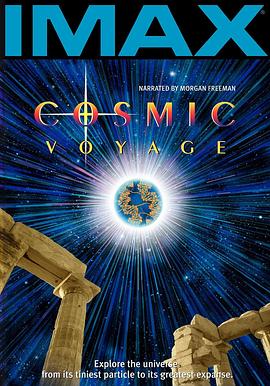
The IMAX "Cosmic Voyage" film was made as a public service with sponsorship by the Smithsonian Air and Space museum. On DVD, borrowed from my local public library, it plays at just over 30 minutes with Morgan Freeman supplying a pleasing narrative. As one would expect from an IMAX film, the image quality is superb and the Dolby 5.1 sound track is very well done. Simulated cosmic explosions shake your walls! That is, if you have a good powered subwoofer in your system.
The film takes a very useful approach to examining the size of the universe, from tiny sub-atomic particles to the vastness of the whole universe. (Fortunately, when God created the Universe he had dispatched a few angels with video cameras at different vantage points so we get to see actual footage from several billion years ago.) The film starts in Venice, where the discovery of the telescope originated, and uses a one-meter hoop as a reference point, then gradually goes larger by powers of 10, e.g. 10 meters, 100, 1000, etc until we can see the whole universe. Then it takes the opposite journey, going smaller by powers of 10 until be see inside sub-atomic particles.
The story is well-woven with beautiful effects created especially for this film. It is entertaining and educational at the same time. All of "oldsters" can enjoy it for the scientific history we are already familiar with, and all the "youngsters" can enjoy it for the educational supplement it provides. Overall a masterful film.
Any numerical "rating" of "Cosmic Voyage" is meaningless. If one is looking for a superb film about our universe and modern theories of its formation, this one is hard to beat. Kudos to IMAX and to the Air and Space Museum.
肉眼只能看见穹苍一角。凝视夜空,但见繁星点点,偶尔一颗流星划破夜空,但你可曾看见恒星死亡前的最后爆发?瞪视双手,你或会看见点点尘垢,但你又可曾看见组成皮肤的原子在颤动?因为眼不能见,我们只能纵驰想像,去探索这个深邃广阔的宇宙。
本片获第六十九届奥斯卡金像奖最佳纪录短片提名.
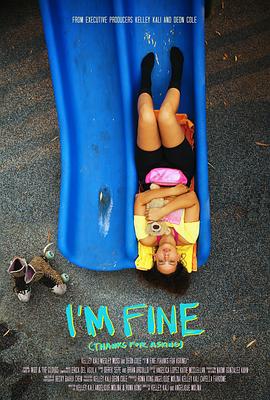
When a recently widowed mother becomes houseless, she convinces her 8-year-old daughter that they are only camping for fun while working to get them off of the streets.